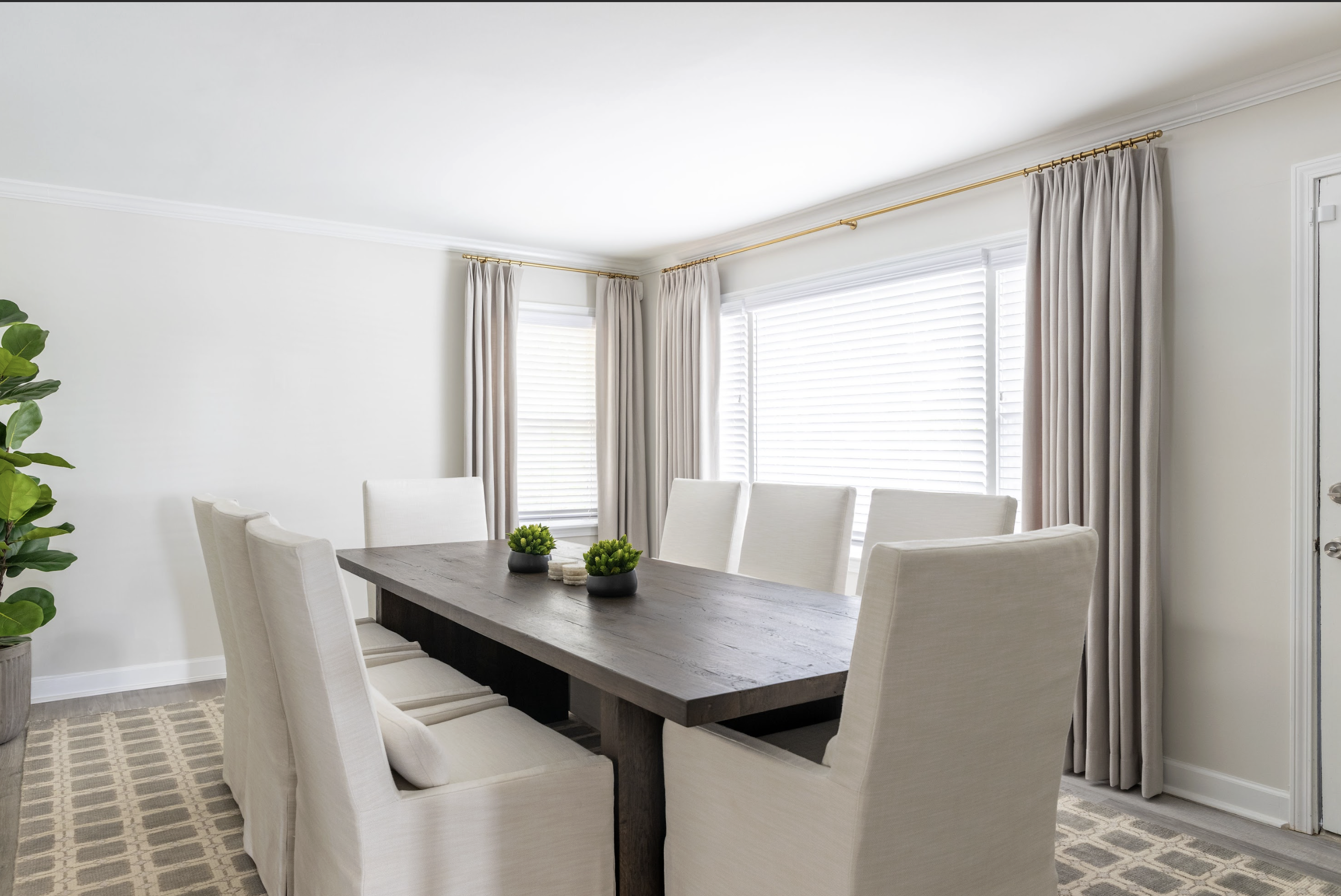
Drapery is one of the most transformative elements in a room.
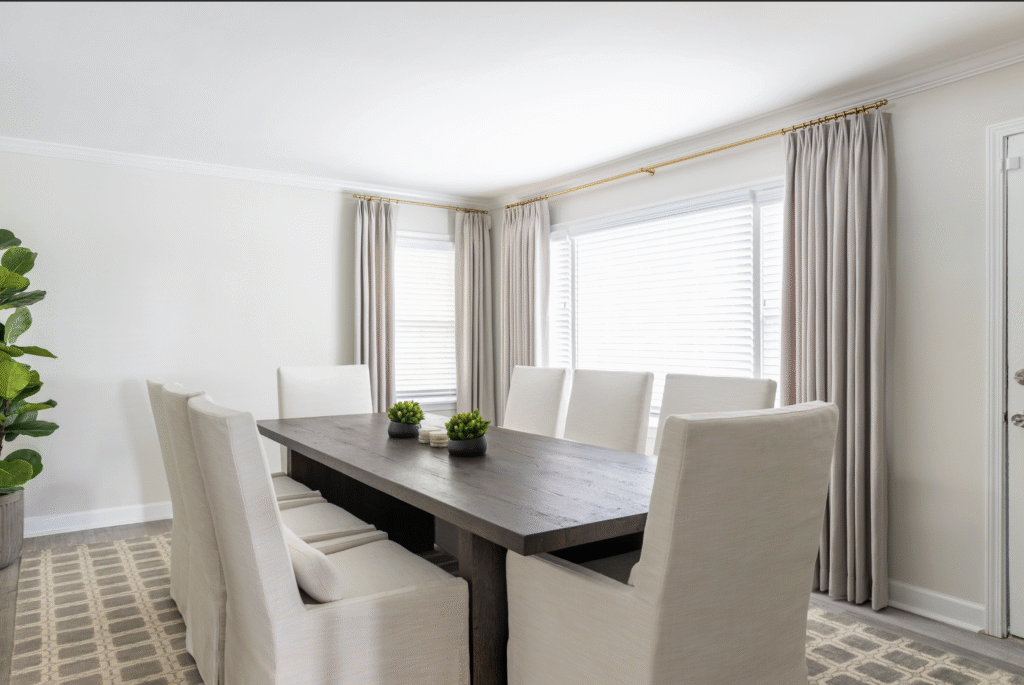
It is also one of the most commonly done incorrectly.
When a space feels unfinished, the issue is often in the details. Window treatments quietly determine whether a room feels polished or incomplete.
The furniture can be beautiful. The layout can work. The palette can feel cohesive.
But if the drapery is off, the room will never feel fully resolved.
Here is how we approach it at Highland Home Design Company.
How High to Hang Curtains
One of the biggest mistakes we see is curtain rods mounted directly above the window frame.
This visually shortens the wall and makes ceilings feel lower.
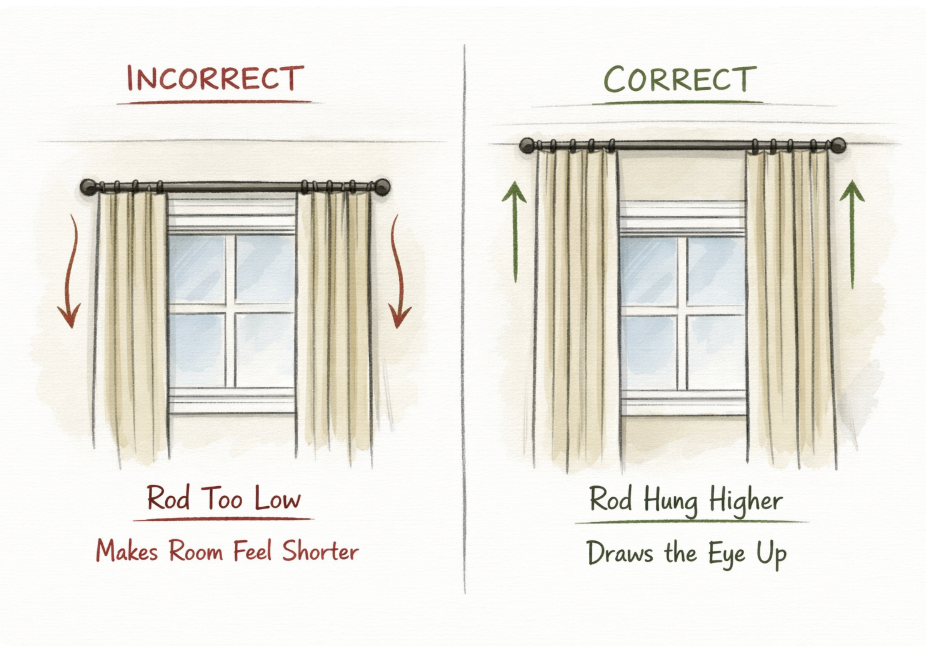
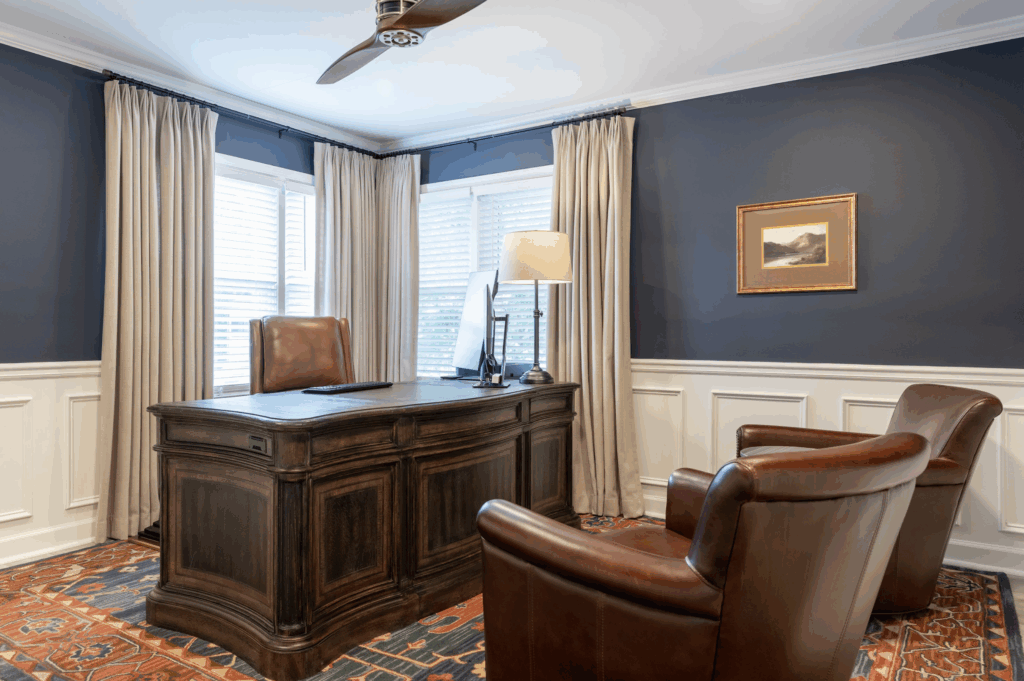
We almost always mount drapery closer to the ceiling rather than just above the window trim. That added height draws the eye upward and gives the room breathing space.
You may not consciously notice it, but you absolutely feel the difference.
Curtain Rod Placement: How Wide Should Drapes Extend?
Curtain rods should extend beyond the window frame on both sides.
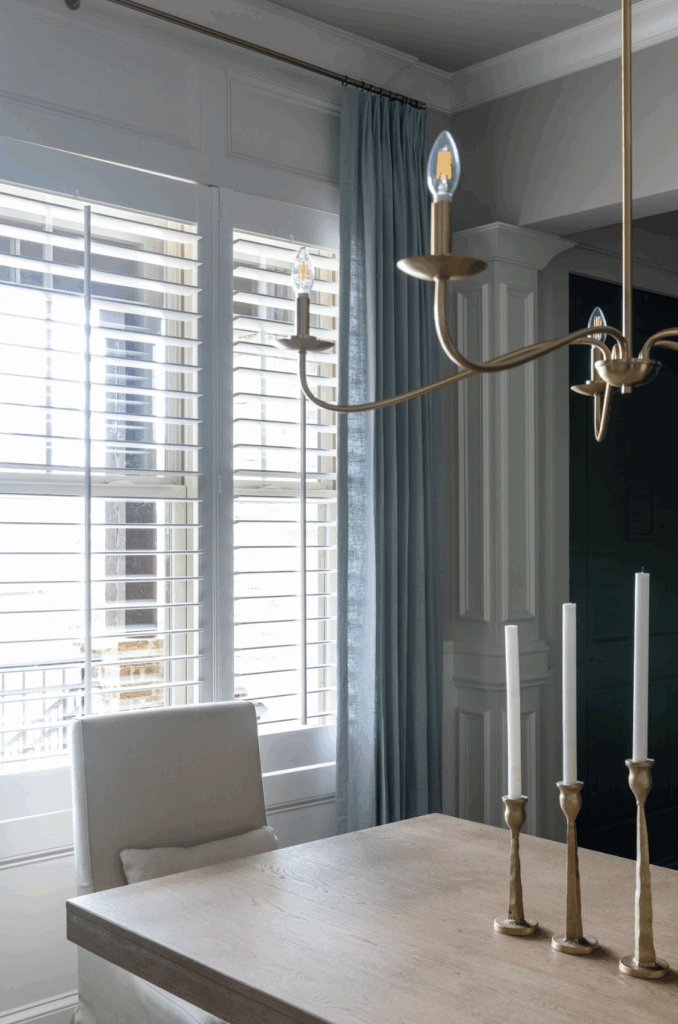
This allows panels to frame the window rather than block it. When open, most of the glass remains visible, maximizing natural light.
When rods are installed too narrow, the proportions feel tight and crowded. Extending the width creates balance and softness.
Curtain Length Guide: Where Should Drapes Fall?
This is where we get very specific.
Drapery should just kiss the floor.

Not hover above it.
Not puddle.
Not break.
Clean. Tailored. Intentional.
Some designers intentionally puddle drapes for a romantic or formal look. In the right setting, that can be beautiful.
It is simply not the look we gravitate toward.
Most of our clients have active households with children and pets. Puddled drapery gets stepped on, collects dust, and requires more maintenance than most people want to manage. It is also more difficult to vacuum around.
And quite honestly, puddling can sometimes read as an incorrect length rather than an intentional design choice, much like drapes that are too short.
For our clients, we prefer a tailored panel that lightly touches the floor and feels precise.
Are 84 Inch Curtains Too Short?
In most cases, yes.
Most major box stores carry 84 inch panels as their longest standard option. For 99 percent of homes, that length is simply too short.
When drapery is mounted correctly near the ceiling, 84 inches will not reach the floor. And if it does, the rod has likely been installed too low.
Instead of defaulting to what is readily available in store aisles, source panels that are appropriate for your ceiling height. This often means ordering longer lengths online or working with a trusted design professional who can guide measurements properly.
Length should be determined by your architecture, not by what happens to be stocked on a shelf.
Why Fullness and Fabric Matter
Beyond placement and length, fullness matters.
Panels that are too narrow look sparse and unfinished. We ensure there is enough width so the drapery feels substantial and soft, even when closed.
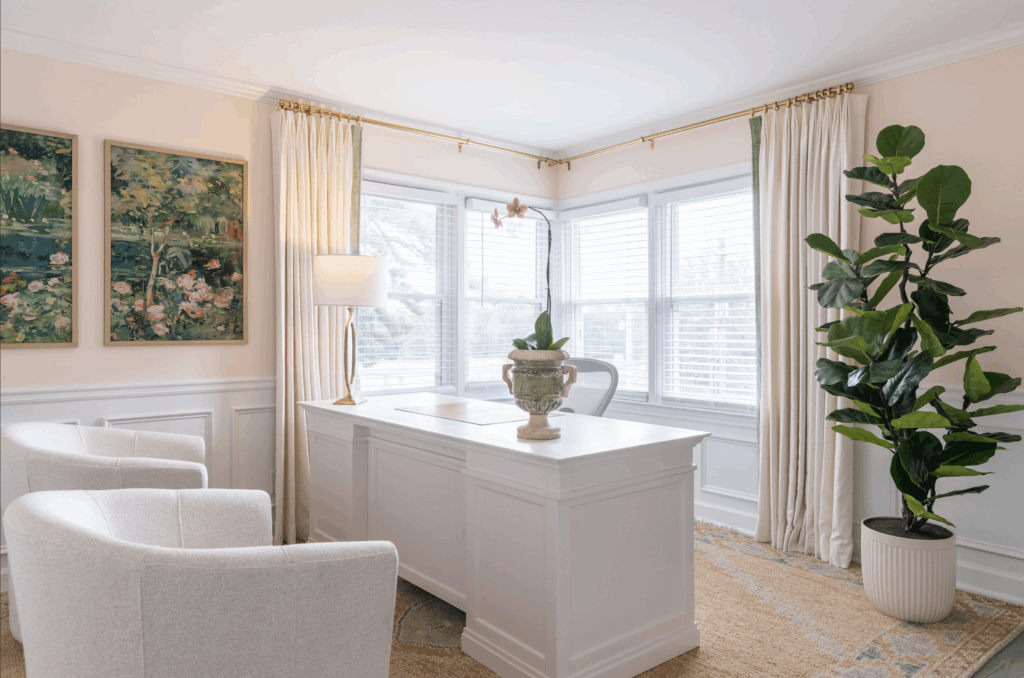
Fabric choice plays a role as well. Linen blends, textured neutrals, and soft solids tend to layer beautifully without overwhelming a space.
The goal is not to compete with the room. It is to soften it.
Professional Curtain Installation Makes the Difference
Selecting the right fabric is only half the process.
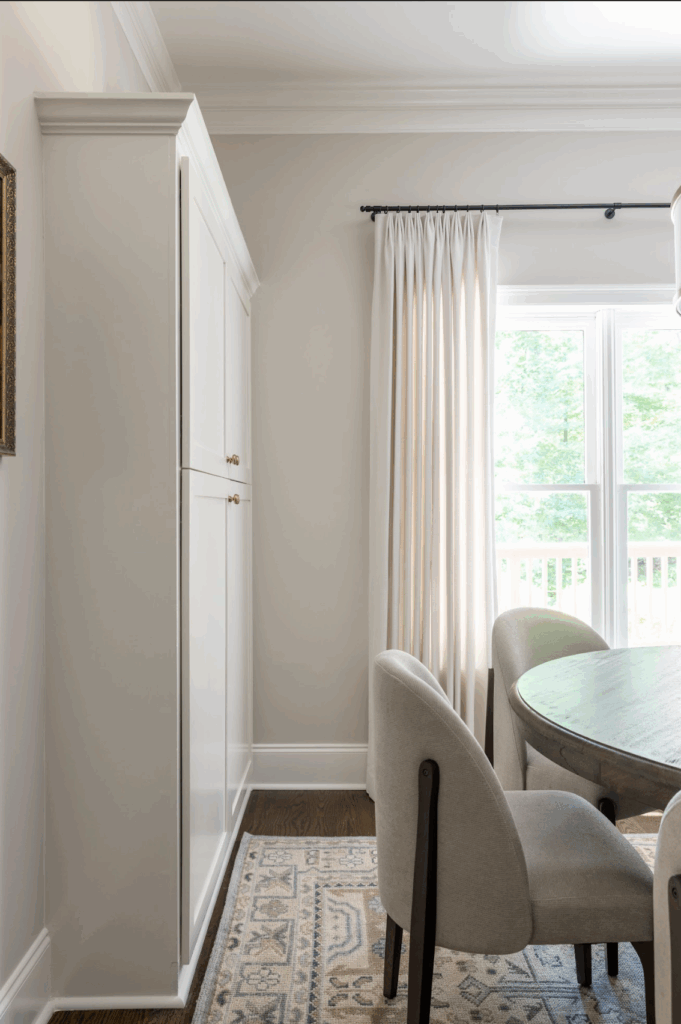
Precise measurements, correct rod placement, panel width, lining choices, and professional installation ultimately determine how the drapery looks in the finished space.
This is why we guide our clients from selection through installation.
When everything is measured and installed intentionally, the result feels effortless.
These subtle details are the difference between a room that feels finished and one that almost does.
If your home feels like it is missing something, it may not need new furniture.
It may need properly installed drapery.
If you are ready to create a space that feels complete and intentional, you can reach out to Highland Home Design Company through our website. We would love to walk through the process with you.

leave a comment