In some parts of the country, mudrooms, built-in lockers and mudroom benches are familiar features in a home. In other regions, they are much less common. We recently worked with a client who had never lived in a home with this type of space, which reminded us that many homeowners may not realize just how useful a thoughtfully designed drop zone can be.
A mudroom bench is much more than a place to sit. It can provide storage, create order and give every member of the household a designated place for the items they use every day.
Whether it is located in a formal mudroom, an entryway, a laundry room or near the garage entrance, a well-designed mudroom bench can make a home feel calmer, more organized and easier to live in.
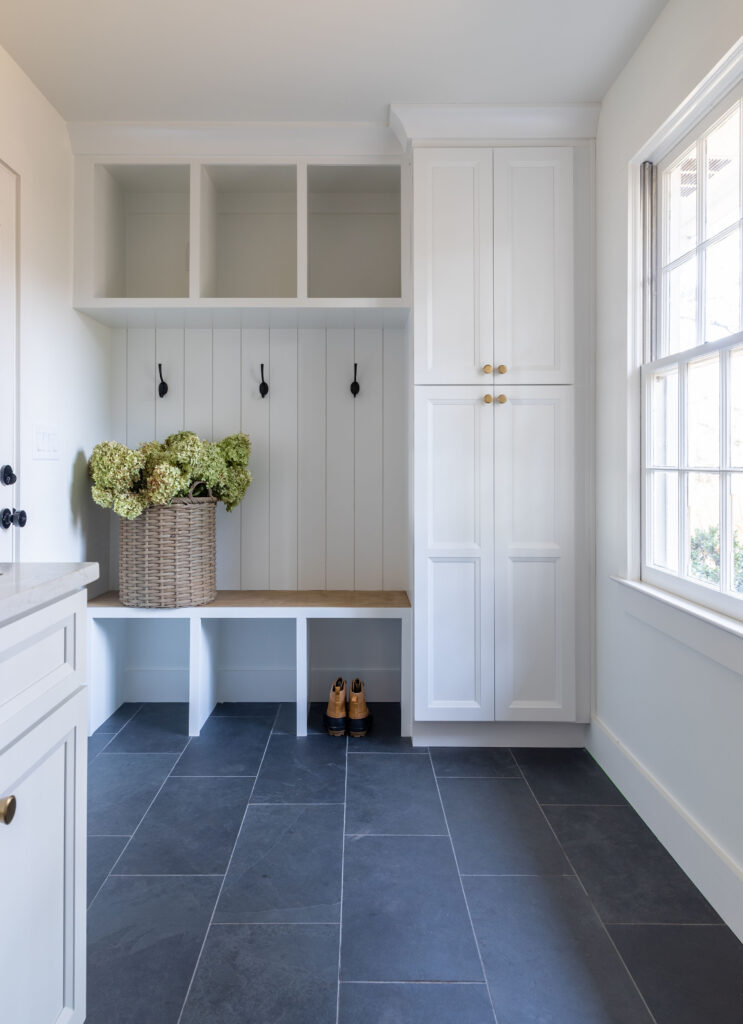
What Is a Mudroom Bench?
A mudroom bench is a built-in or freestanding seating and storage area located near one of the home’s entrances. It may also be referred to as an entryway bench with storage, a family drop zone, a mudroom locker system or built-in entryway storage.
The bench provides a comfortable place to sit while putting on or taking off shoes. Depending on how the space is designed, it can also include hooks, lockers, cubbies, drawers, baskets, cabinets and shoe storage.
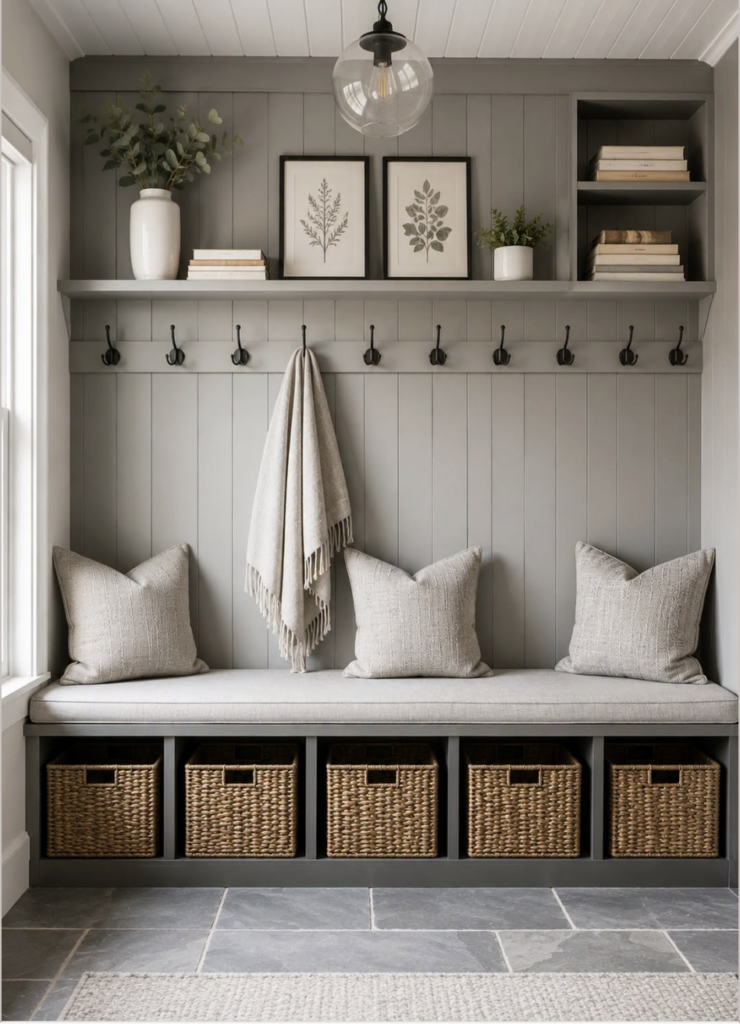
The goal is to create one designated area for the things that tend to enter and leave the home every day.
Instead of backpacks landing on the kitchen floor, shoes collecting by the door and coats being draped over chairs, everything has a place. Family members know where their belongings belong, and they also know where to find them when it is time to leave.
That sense of order is one of the greatest benefits of a well-designed mudroom or entryway.
Mudroom Benches Are About More Than Mud
The name can make this feature sound specific to homes in cold, rainy or snowy climates. In reality, a mudroom bench can be useful in almost any home and in any part of the country.
The items stored there may simply change depending on the family and the region.
In one home, the space may hold winter coats, boots, hats and gloves. In another, it may store beach bags, pool towels, sandals, sunscreen or gardening supplies. For a busy family, it may become the home for backpacks, sports equipment, handbags, work bags and pet leashes.
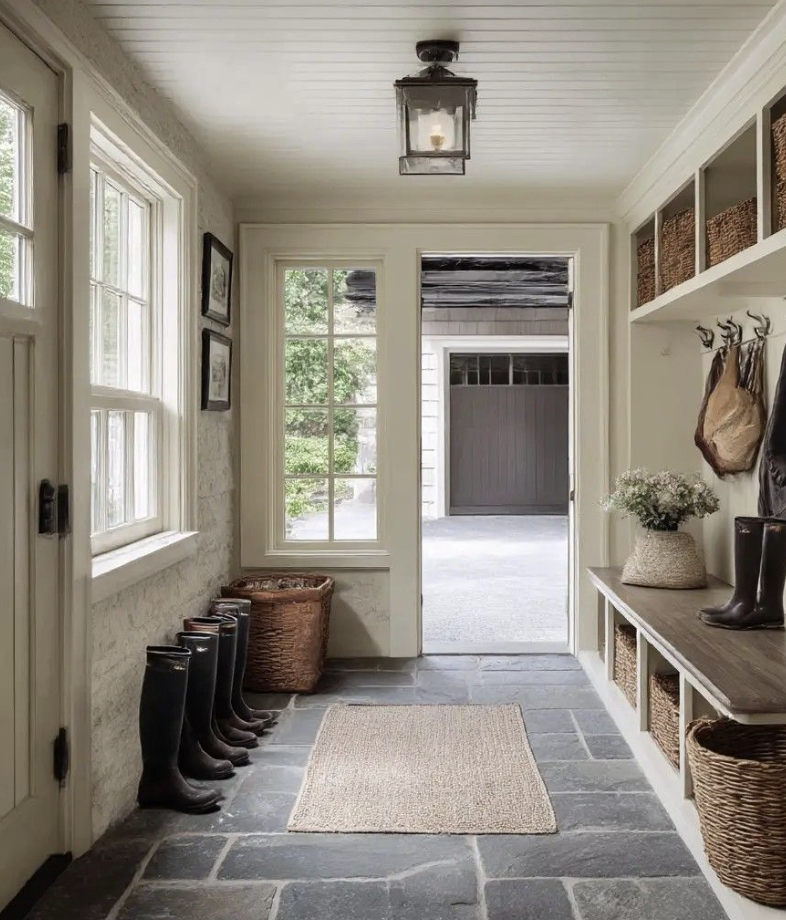
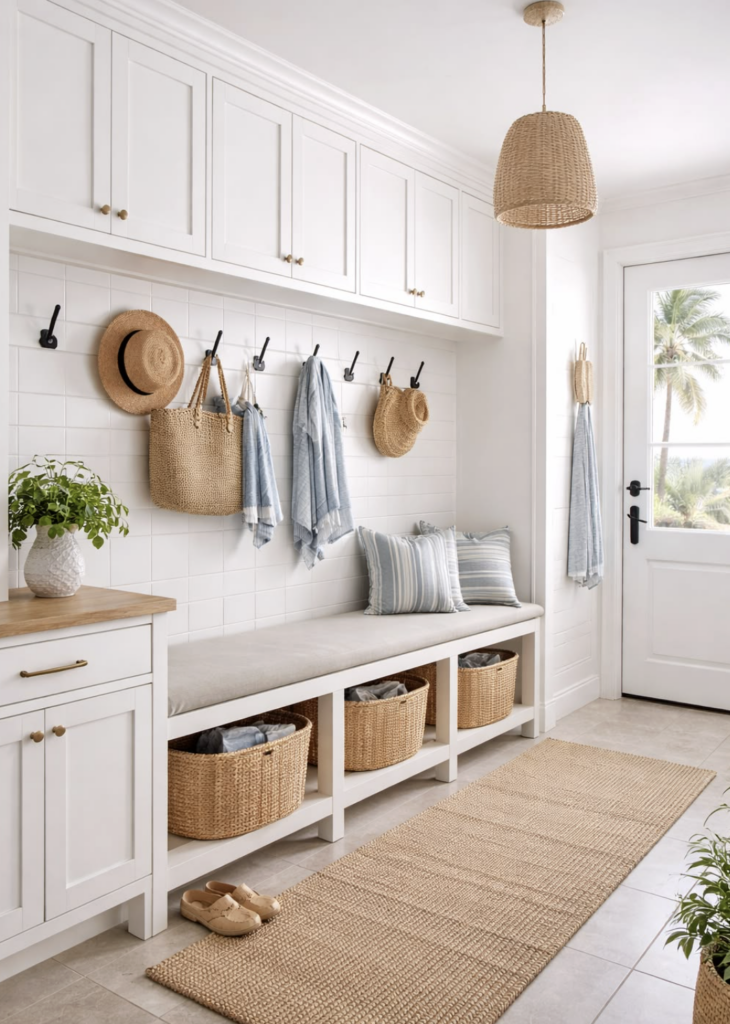
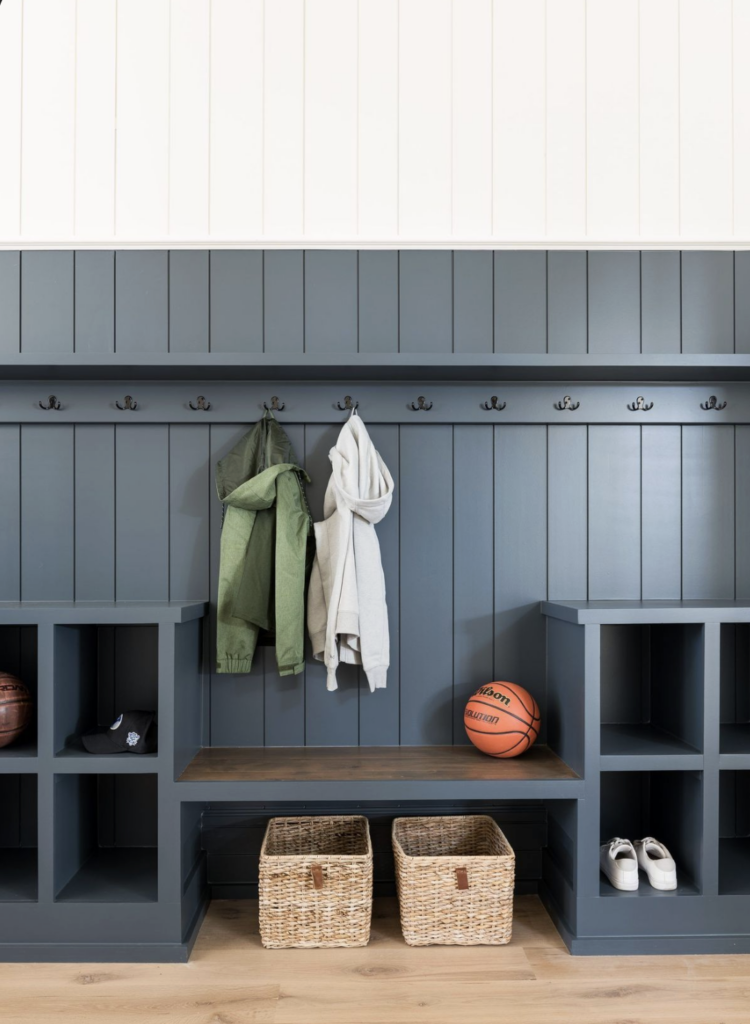
The purpose is not necessarily to manage mud. It is to manage the transition between the outside world and the rest of the home.
Most households have a door they use more frequently than the others. That entrance naturally becomes the place where belongings are dropped at the end of the day. By designing storage around that behavior, we can prevent clutter from spreading into the kitchen, living room and other areas of the home.
How We Design Mudroom and Entryway Storage
We do not approach mudroom benches, lockers or cubbies as one-size-fits-all features. We configure them to meet the specific needs of the family using the space.
Before designing the cabinetry, we consider how the household lives from day to day.
We look at which entrance the family uses most often, how many people need storage and what items regularly come through the door. We also consider whether the homeowners prefer their belongings to be visible and easily accessible or concealed behind cabinetry.
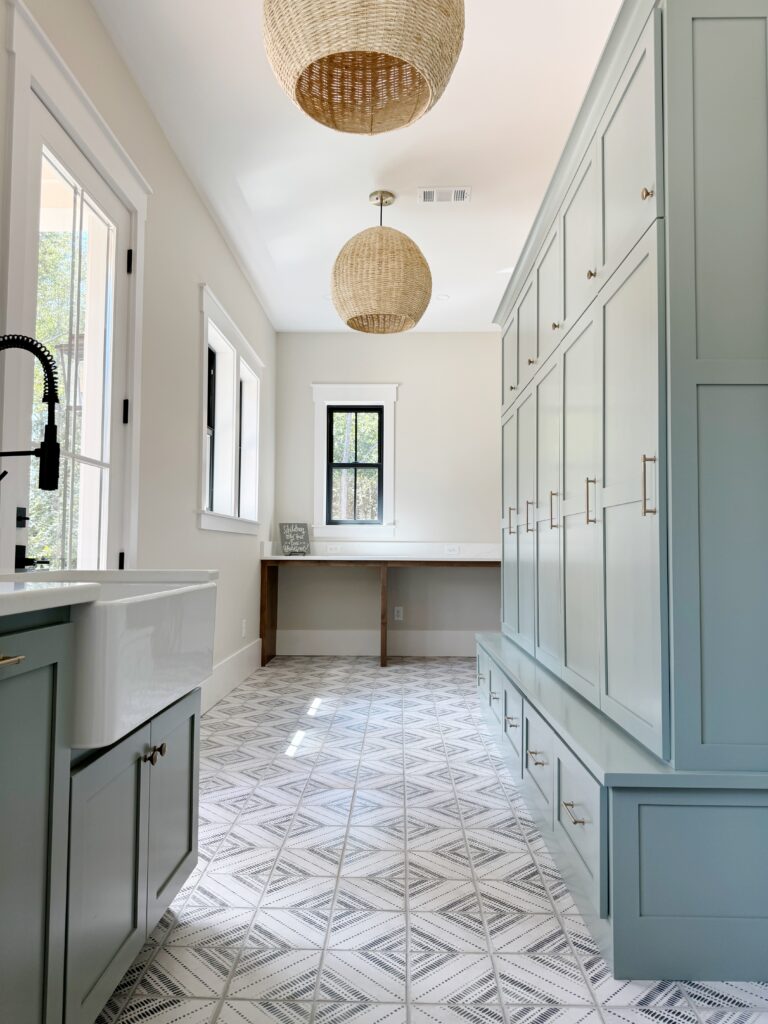
A custom mudroom or entryway design may include:
- A bench for putting on and removing shoes
- Open cubbies for shoes, baskets or bags
- Hooks for coats, backpacks, purses and dog leashes
- Individual lockers for family members
- Drawers for smaller items
- Upper cabinets for seasonal or less frequently used belongings
- Closed cabinetry for reducing visual clutter
- A counter or landing area for keys, mail and sunglasses
- Durable finishes that can withstand everyday use
The sizes and proportions matter just as much as the features themselves. Backpack storage needs to be deep enough to function properly. Hooks should be positioned at useful heights. Shoe storage should reflect the number and types of shoes the family actually owns.
The most successful designs begin with the family’s routines rather than with a standard cabinet configuration.
Open Lockers Versus Closed Cabinetry
One of the most important decisions in a mudroom or entryway design is whether to use open lockers or closed cabinetry.
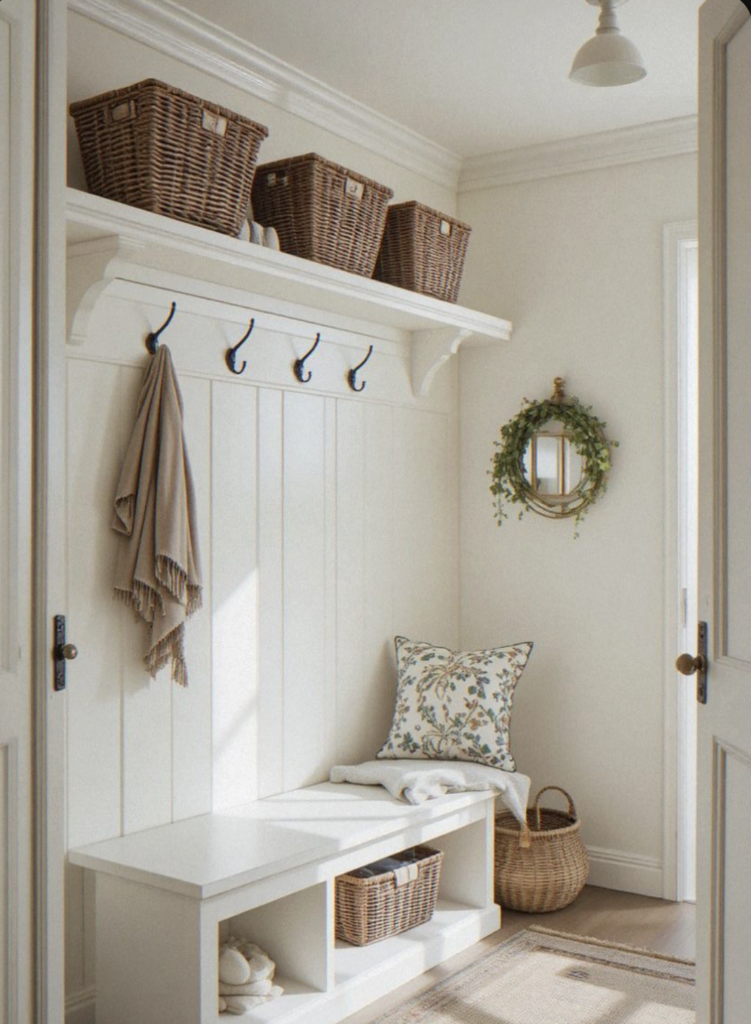
There is no single right answer. The best choice depends on the homeowners’ priorities, habits and budget.
Why Clients Choose Open Lockers
Open lockers provide instant access. Coats, backpacks and bags can be placed on hooks without opening and closing doors throughout the day. This can be especially helpful for families with children because it makes the storage easy to see and easy to use.
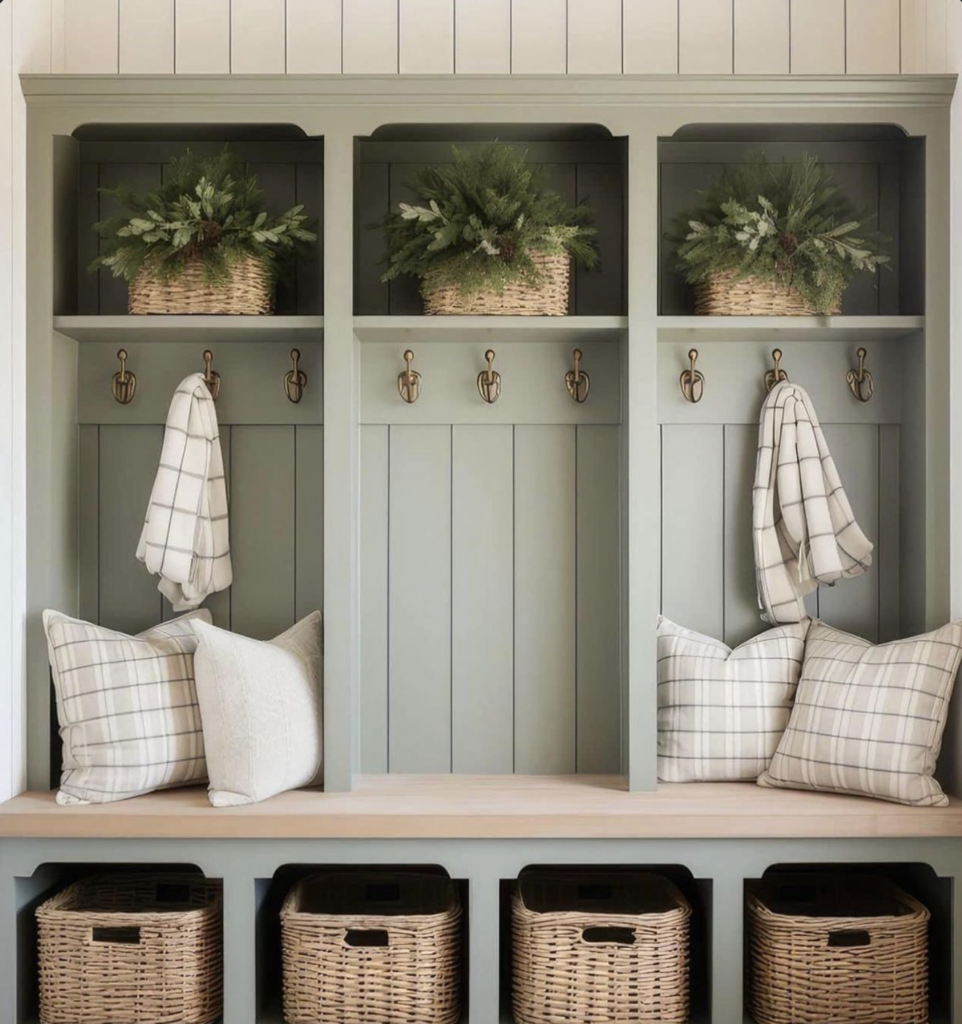
Open designs can also help reduce the cost of the cabinetry. Eliminating some cabinet doors, hinges and hardware may make it possible to create a larger or more functional built-in while staying within the project budget.
They also allow each family member to have a clearly defined space. Individual lockers or cubbies can help children and adults quickly identify where their belongings belong.
The main consideration is that open storage remains visible. It works best for clients who are comfortable seeing the everyday items stored there and who are willing to keep the area relatively organized.
Why Clients Choose Closed Cabinetry
Closed cabinetry is often preferred by clients who want to store and hide everything.
Cabinet doors can create a cleaner and quieter appearance, especially when the mudroom or entryway is visible from the kitchen or another main living area. When the doors are closed, coats, bags, shoes and other belongings are concealed.
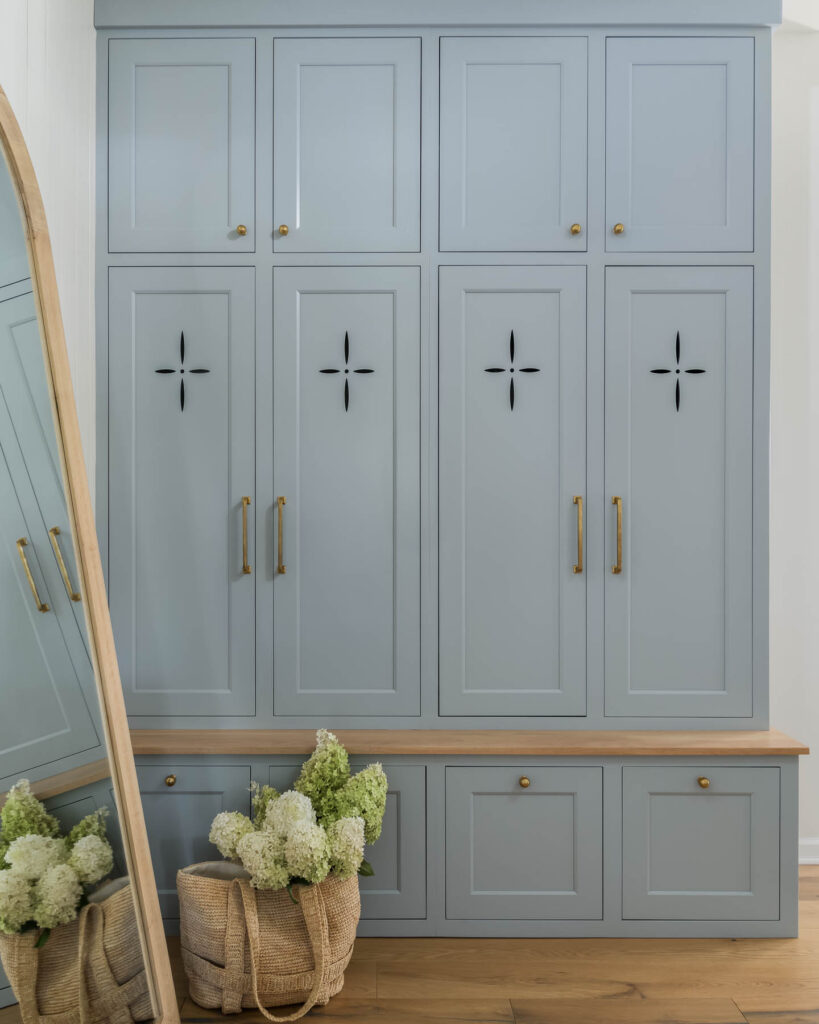
This can be especially helpful in homes with open floor plans where the drop zone is not located in a separate room.
Closed cabinets can also be coordinated with nearby kitchen or laundry room cabinetry so the entire space feels intentional and connected.
For many projects, we use a combination of both. Open hooks may provide quick access to frequently used items, while drawers and cabinets conceal shoes, seasonal pieces and visual clutter.
The Best Mudroom Bench Is Designed Around the Family
More storage does not always mean better storage.
A large built-in can still be ineffective when the compartments are too small, the hooks are poorly placed or the storage does not match the family’s belongings.
For example, narrow cubbies may not accommodate backpacks. A bench without nearby shoe storage may still allow shoes to collect on the floor. Too few hooks can result in coats and bags being layered on top of one another.
We also consider who will be using the space. Younger children may need hooks positioned lower on the wall. Adults may need taller compartments for coats or work bags. A household with pets may benefit from storage for leashes, food, towels and outdoor supplies.
The design should make the desired behavior feel natural. When a space is intuitive and easy to use, it is much more likely to stay organized.
Where to Add a Mudroom Bench When You Do Not Have a Mudroom
A formal mudroom is helpful, but it is not required.
Many homes have underused areas that can be transformed into a functional entryway drop zone. The most important factor is placing the storage near the entrance the family uses most frequently.
Possible locations include:
- Inside the garage entrance
- In a laundry room
- Along a hallway
- Near a side or back door
- Beneath a staircase
- In an entryway alcove
- Along an unused wall near the kitchen
- Inside or beside an existing closet
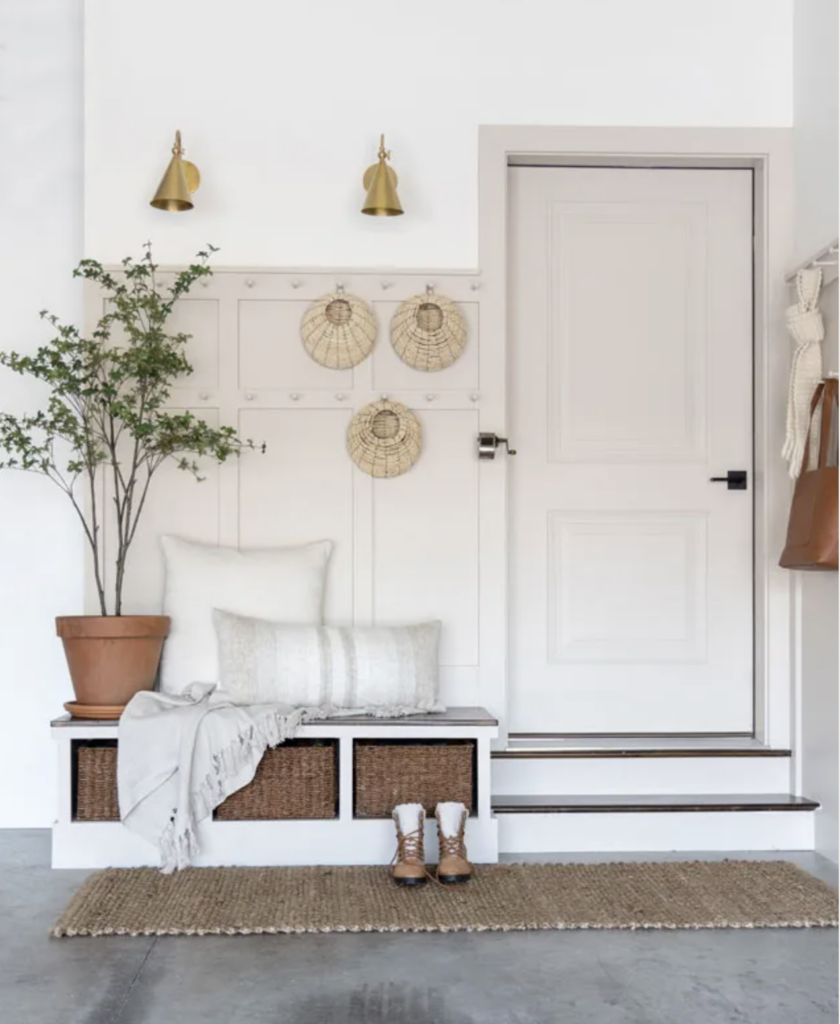
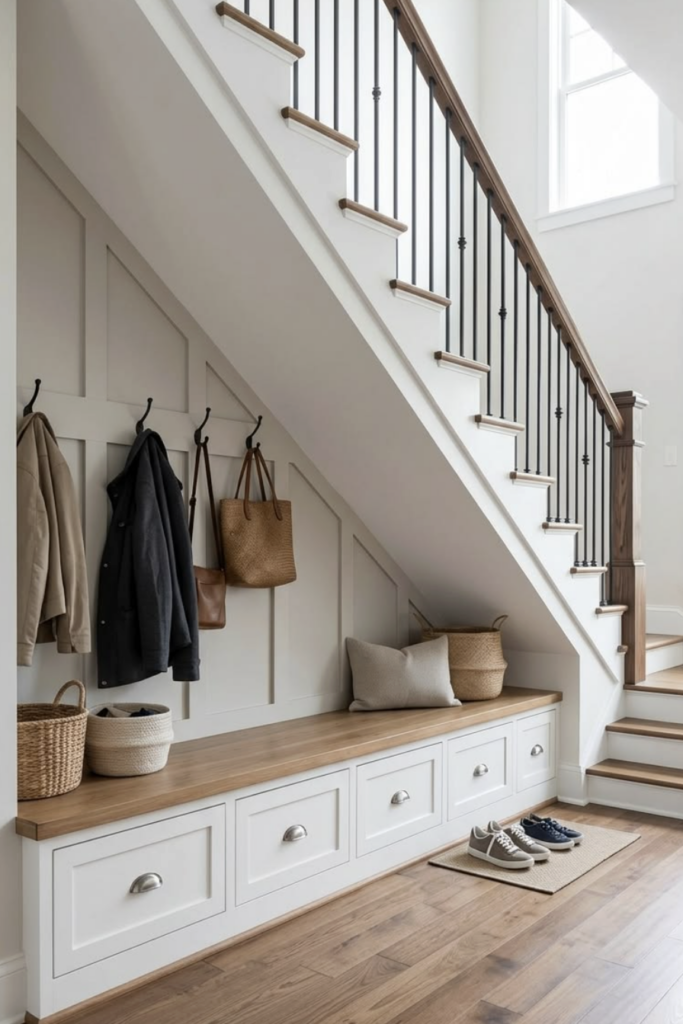
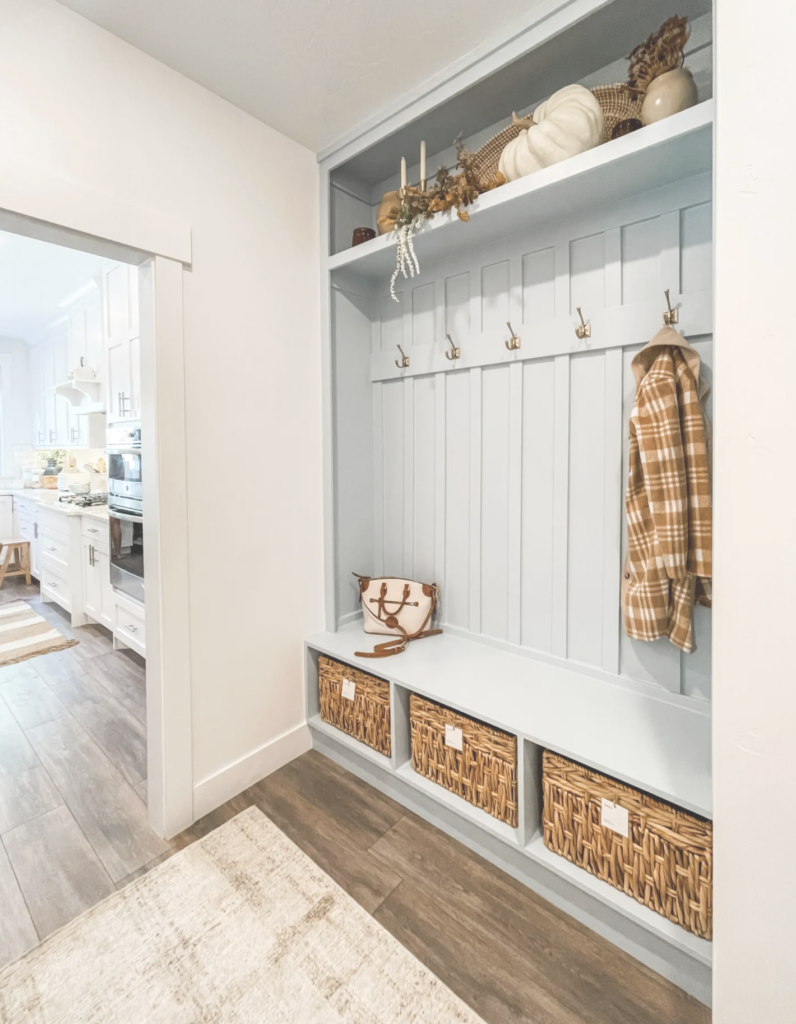
Sometimes the best solution requires rethinking how an existing space is being used.
The Hog Mountain Kitchen and Laundry Room Renovation
In our Hog Mountain Kitchen and Laundry Room Renovation, we created a more functional transition area by expanding into a garage closet that housed the laundry room.
The closet opened into the client’s home, which made it a natural location for a practical drop zone. However, the original arrangement did not use the available space as efficiently as it could.
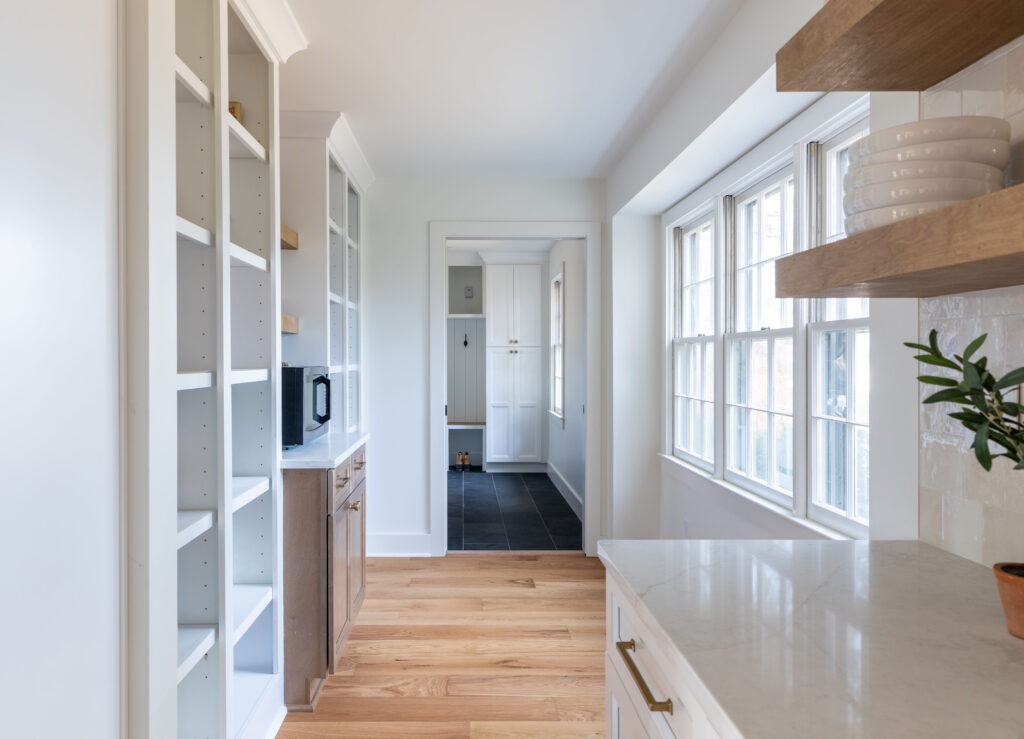
We stacked the washer and dryer to create optimal space within the room. By moving the appliances vertically, we were able to free up valuable floor and wall space for additional storage and function.
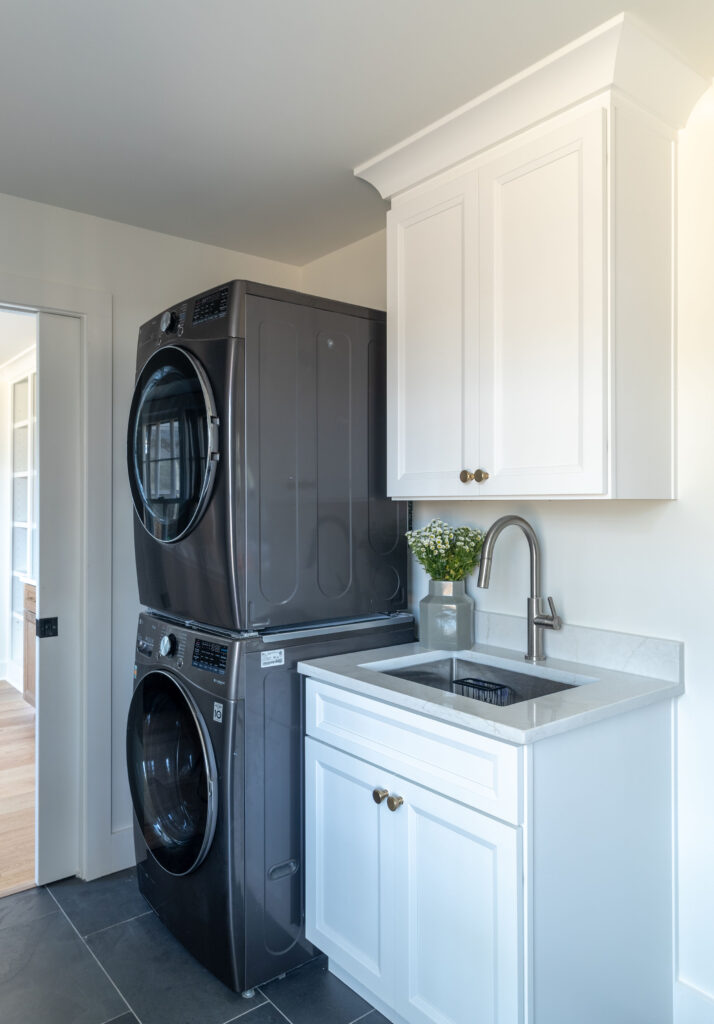
This allowed us to transform a compact laundry area into a more useful connection between the garage and the home.
The project is a good example of why homeowners should not assume they need a large addition or a dedicated mudroom to gain this type of storage. Sometimes the opportunity already exists inside a closet, laundry room or underused hallway. Thoughtful space planning can completely change how that area serves the family.
Is a Mudroom Bench Right for Your Home?
A mudroom bench can be one of the hardest-working features in a home.
It provides a place to sit, creates valuable storage and establishes a designated drop zone for everyday belongings. It helps everyone in the household know where their items are and where they should be returned.
Most importantly, it can be customized to support the way the family actually lives.
Whether you choose open lockers, closed cabinetry or a combination of both, the goal is the same: to create a smoother transition into and out of the home.
Even when a home does not include a traditional mudroom, a carefully designed entryway bench, locker system or built-in drop zone can bring order to one of the busiest areas of daily life.
At Highland Home Design, we look for opportunities to make every area of a home more functional. Sometimes that means designing an entirely new mudroom. Other times, it means reimagining a laundry room, closet or unused wall to create storage exactly where the family needs it most.

leave a comment